Municipal bulk collection in the City of Tampa regularly limits curbside piles to 5 cubic yards and requires waiting weeks during post-tropical storm recovery. When squalls or hurricanes strike coastal sections of…
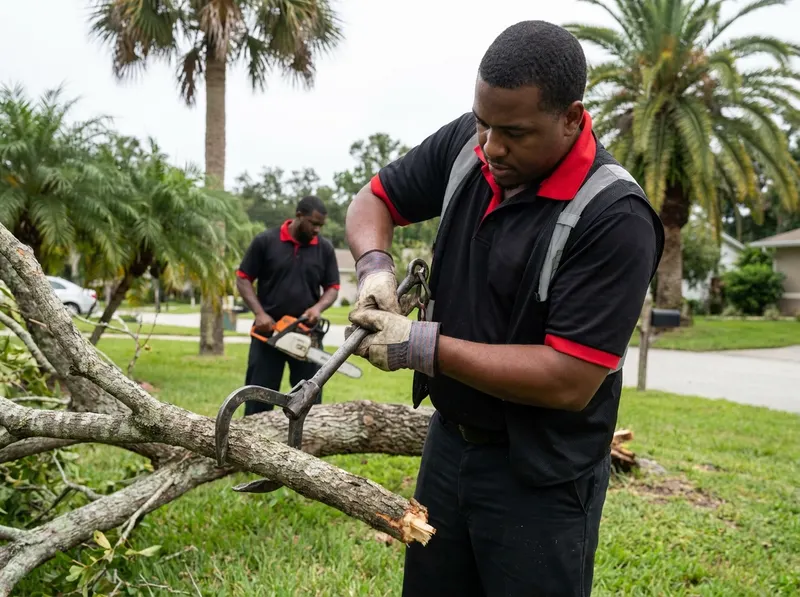
Municipal bulk collection in the City of Tampa regularly limits curbside piles to 5 cubic yards and requires waiting weeks during post-tropical storm recovery. When squalls or hurricanes strike coastal sections of Davis Islands or drop dense laurel oak limbs across Seminole Heights and Tampa Heights, lingering piles quickly kill turf, harbor pests, and incur strict municipal code citations. Private bulk hauling eliminates the municipal delay by dispatching dedicated equipment directly to private properties. Hauling operations place heavy wooden surface boards beneath container contact points to safeguard brick pavers in Hyde Park and stamped concrete in Palma Ceia from cracked surfaces or rutting caused by heavy hydraulic steel wheels.
Selecting the right debris solution comes down to material segregation and hauling volume. Vegetative vegetative waste such as palm fronds, Spanish moss, and tree trunks must head to regional composting or yard-trash transfer facilities, whereas saturated carpet, damaged roof shingles, and sodden drywall require separate solid-waste tipping at permitted Hillsborough County facilities. If a property in Carrollwood or Westchase has solely fallen perimeter fences and light branches, an on-demand truckload crew can pack and haul the material in a single morning. If an interior water line backflow or roof compromise occurs in a two-story home in New Tampa, staging an on-site roll-off container gives cleanup contractors continuous disposal access over several days. The trade-off is workspace: dedicated containers occupy an entire 20-foot driveway bay, while rapid live-load clearing frees vehicle access immediately but demands that all debris is piled beforehand.
The steps to clearing residential storm debris follow an efficient three-part process: 1. A crew assesses the pile footprint on-site to inspect weight thresholds and overhead lines near Ybor City or the Channel District. 2. Heavy-duty timber runners are placed on the driveway surface before parking or staging steel collection equipment. 3. Debris is sorted, mechanically or manually loaded into high-capacity volume trucks, and hauled to the nearest county-licensed disposal station, leaving the driveway swept clean.
Every job gets a firm, written price after a free on-site visit.
Tell us about your storm debris waste removal job in tampa and we'll send a clear, written quote, usually the same day.
 Clay County Dumpster Rental